
 How a simple morning walk can become a grounding practice when you trade pace for presence.

The Quiet Art of Brewing Pine Needle Tea in Winter
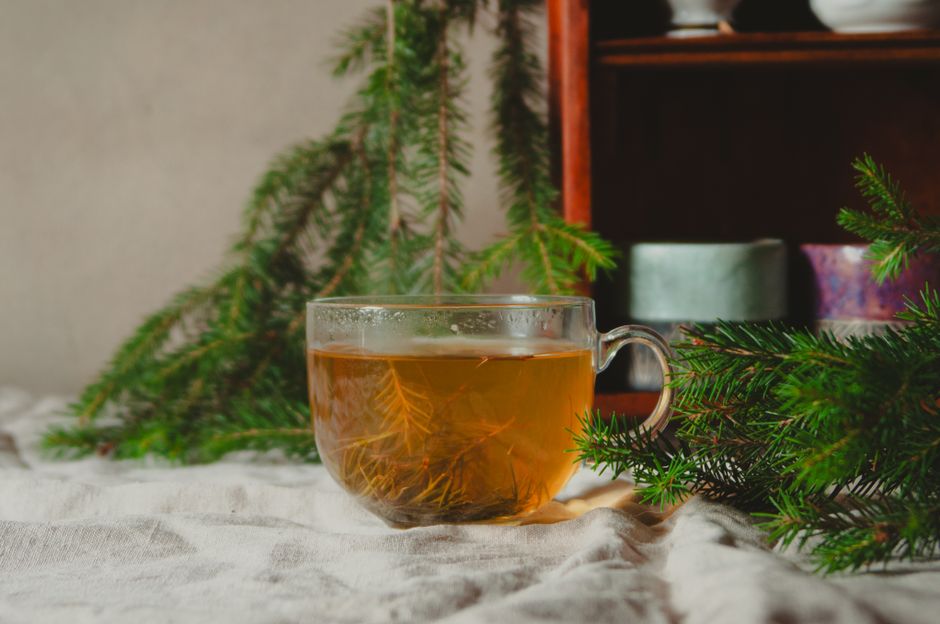
There is a particular stillness that settles over the woods in January. The ground is hard, the birds are quiet, and the only color left belongs to the evergreens. On days when the cold feels like it has seeped into my bones, I bundle up and walk the familiar path behind our property, not really looking for anything in particular until I catch the sharp, clean scent of pine on the air. That scent is my cue. I gather a small handful of needles from the lower branches of a white pine, never more than I need, and I head home to make tea.
Foraging in winter can feel like a lesson in patience. So much of the natural world is sleeping, and the harvest is sparse compared to the abundance of late summer. But the evergreens offer themselves freely, and there is something quietly generous about that. I only take from trees I know well, avoiding any that grow close to roadsides where exhaust and runoff might linger. A few sprigs from several different branches is plenty; the tree barely notices, and I leave the rest to weather the season.
Why Pine Needles Are Worth the Walk
Pine needles have long been used in folk traditions as a winter tonic, and it is not hard to understand why. They carry a bright, resinous flavor that tastes like the forest itself, and they are rich in vitamin C, which feels like a small gift during the months when fresh produce is scarce. I am not a doctor, and I would never suggest that a cup of tea can replace real medicine, but I do believe there is value in eating and drinking with the seasons, and pine is one of the few green things winter offers.
If you are new to foraging, pine is a gentle place to begin, but it does require care. Not every evergreen is edible. Yew, for instance, is toxic, and it can look deceptively similar to other conifers at a glance. Learn to identify white pine by its soft, flexible needles that grow in bundles of five, and if you are ever unsure, leave it be. There is no shame in caution. The woods will still be there tomorrow.
A Simple Ritual for a Cold Afternoon
Once home, I rinse the needles well and chop them roughly to release their oils. I bring a pot of water to a gentle simmer, add the needles, and let them steep for about fifteen minutes, covered so the volatile oils do not escape with the steam. The result is a pale green tea with a flavor that is somewhere between citrus and cedar, warming and slightly sweet. Sometimes I add a slice of dried orange or a bit of honey, though honestly, it is lovely on its own.
What I love most about this ritual is how it slows me down. There is no rush in gathering, no rush in steeping, no rush in drinking. It is a small act of attention, a way of saying yes to the season rather than wishing it away. In a world that constantly urges us toward the next thing, a cup of pine needle tea is a quiet rebellion. It asks nothing of me but presence.
If you try it, I hope you take your time. Let the walk be part of the remedy. Let the steam warm your face. And if the tea tastes a little too much like a Christmas tree, well, that is the forest reminding you where you came from.